
Elena Neumann · 24 October 2026
Patterns of Content Lifecycle Management in Evolving Digital Platform Ecosystems
Content lifecycle management in digital platform ecosystems follows structured patterns that adapt as platforms scale and incorporate new technologies, and researchers track these shifts through metrics on creation, distribution, consumption, and archival processes.
Platforms manage content through phases where initial generation gives way to optimization, user interaction, and eventual retention or removal, while data from industry reports indicates that automated systems now handle over 60 percent of these transitions in major ecosystems as of October 2026.
Core Stages in Content Lifecycle Patterns
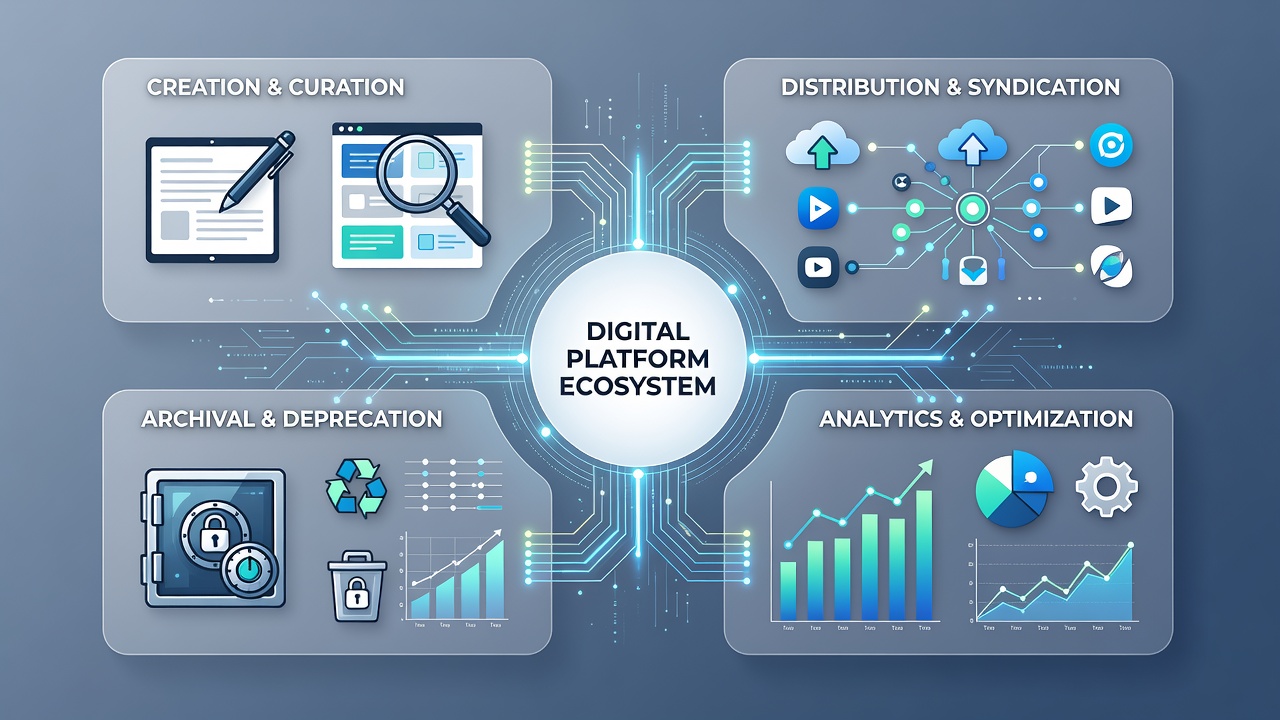
Observers note that content begins with creation tools integrated into platforms, moves through distribution algorithms that prioritize visibility, reaches consumption points measured by engagement analytics, and concludes with archival decisions based on compliance rules or performance thresholds, and studies from institutions like the OECD highlight how these stages interconnect in environments supporting millions of daily updates.
Patterns emerge when platforms apply machine learning to predict content relevance, which reduces manual intervention during distribution and allows for real-time adjustments, yet retention policies often require human oversight to align with regional data regulations such as those outlined in Canadian digital privacy frameworks.
Adaptations in Evolving Platform Ecosystems
Digital platforms evolve through API expansions and third-party integrations that alter how content moves between stages, and evidence from research at universities in Australia shows that ecosystems incorporating cloud-native architectures experience 35 percent faster archival cycles compared to legacy systems.
Those who analyze platform logs report increased use of metadata tagging during creation to support later personalization, which connects directly to consumption metrics and enables platforms to archive underperforming items without disrupting user access patterns.
Regulatory updates in the European Union, including directives on platform accountability, have prompted standardized lifecycle protocols that emphasize transparency in content removal decisions, and figures from the European Commission's digital reports reveal that compliance-driven archival has risen steadily since 2024.
Observed Patterns Across Ecosystems
Patterns of automation dominate in large-scale platforms where content generation tools feed directly into moderation queues, and this reduces bottlenecks while maintaining audit trails for accountability, according to analyses conducted by trade groups in the technology sector.
Cross-platform migrations introduce variability as content transfers between services, yet consistent tagging practices help preserve lifecycle continuity, and one examination of enterprise systems found that standardized schemas cut retrieval errors by half in multi-environment setups.
Consumption data drives iterative refinements in distribution, creating feedback loops that influence future creation priorities, while archival triggers tied to inactivity thresholds or legal hold requirements maintain system efficiency without arbitrary deletions.
Integration of External Data Sources
Platforms draw on external benchmarks to refine lifecycle management, and a report from the U.S. National Institute of Standards and Technology details frameworks for measuring content persistence that help operators align internal processes with broader industry standards.
Academic reviews further document how evolving ecosystems balance user-generated material against curated streams, resulting in hybrid patterns where automated flags route items to appropriate lifecycle paths based on risk assessments and engagement forecasts.
Conclusion
Patterns in content lifecycle management reflect ongoing adaptations within digital platform ecosystems, supported by data from regulatory bodies, academic studies, and technical standards organizations that track efficiency gains and compliance outcomes across regions.